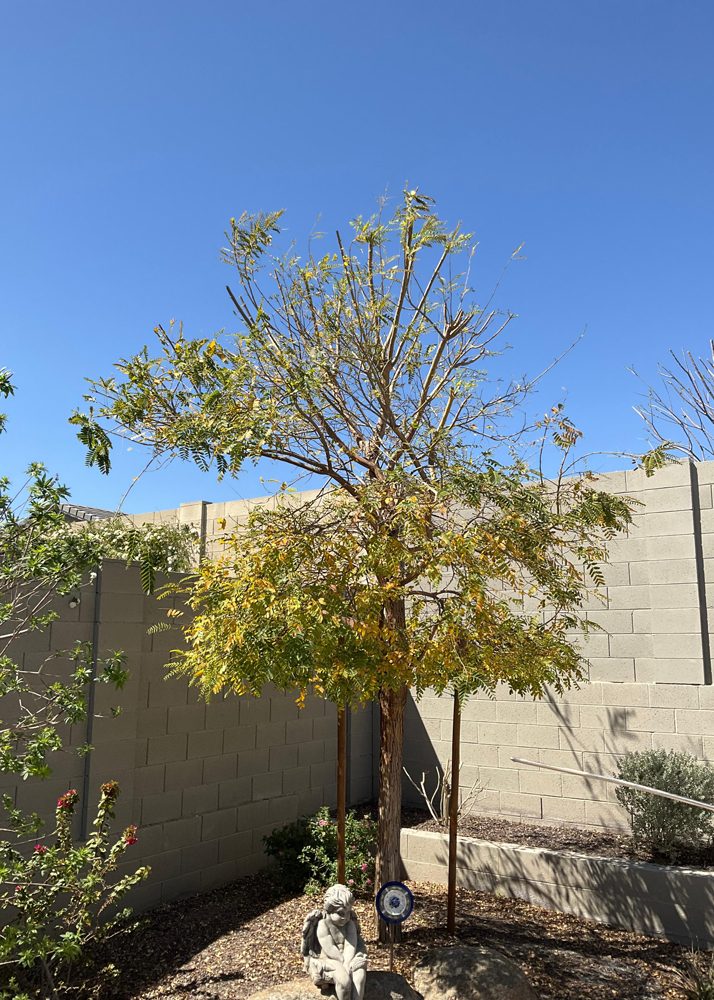
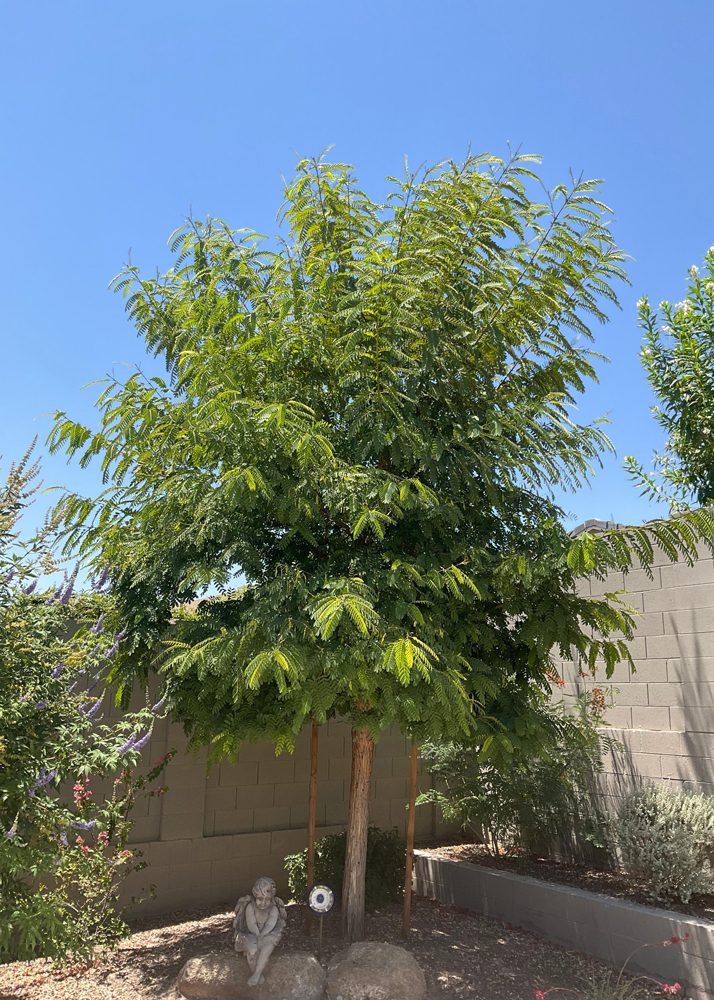

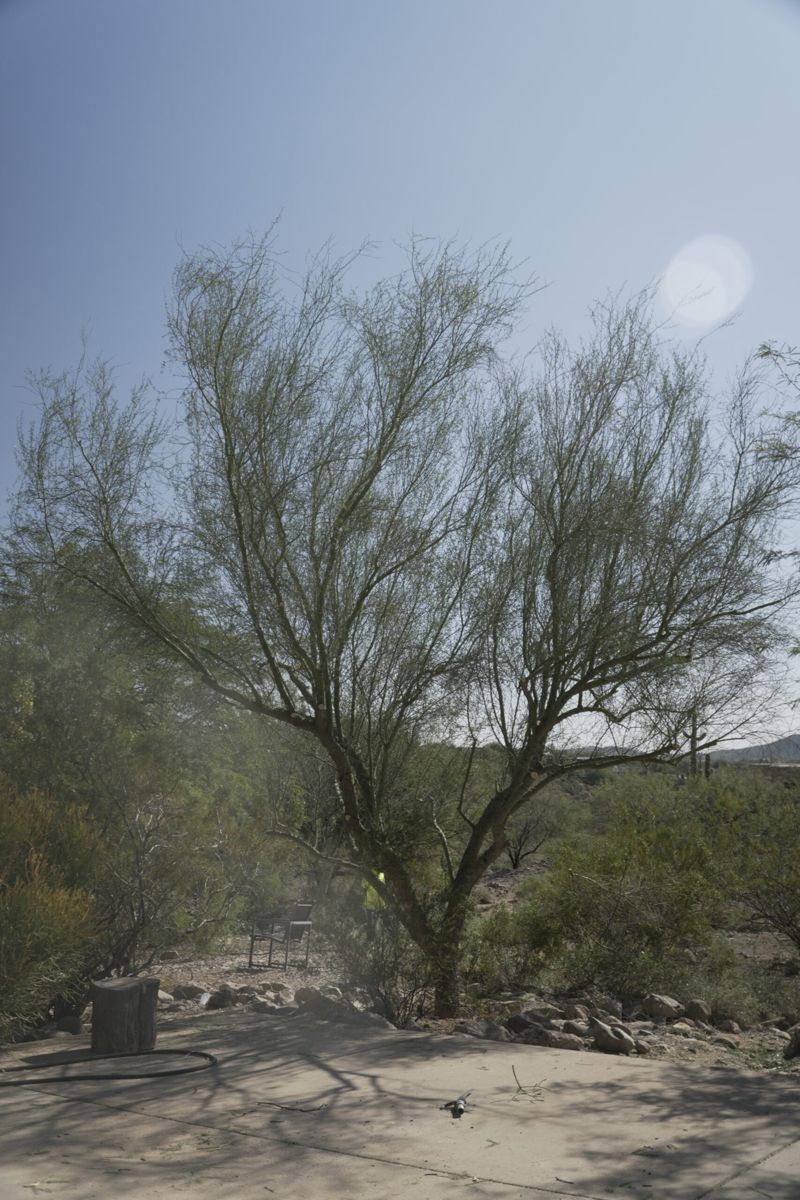
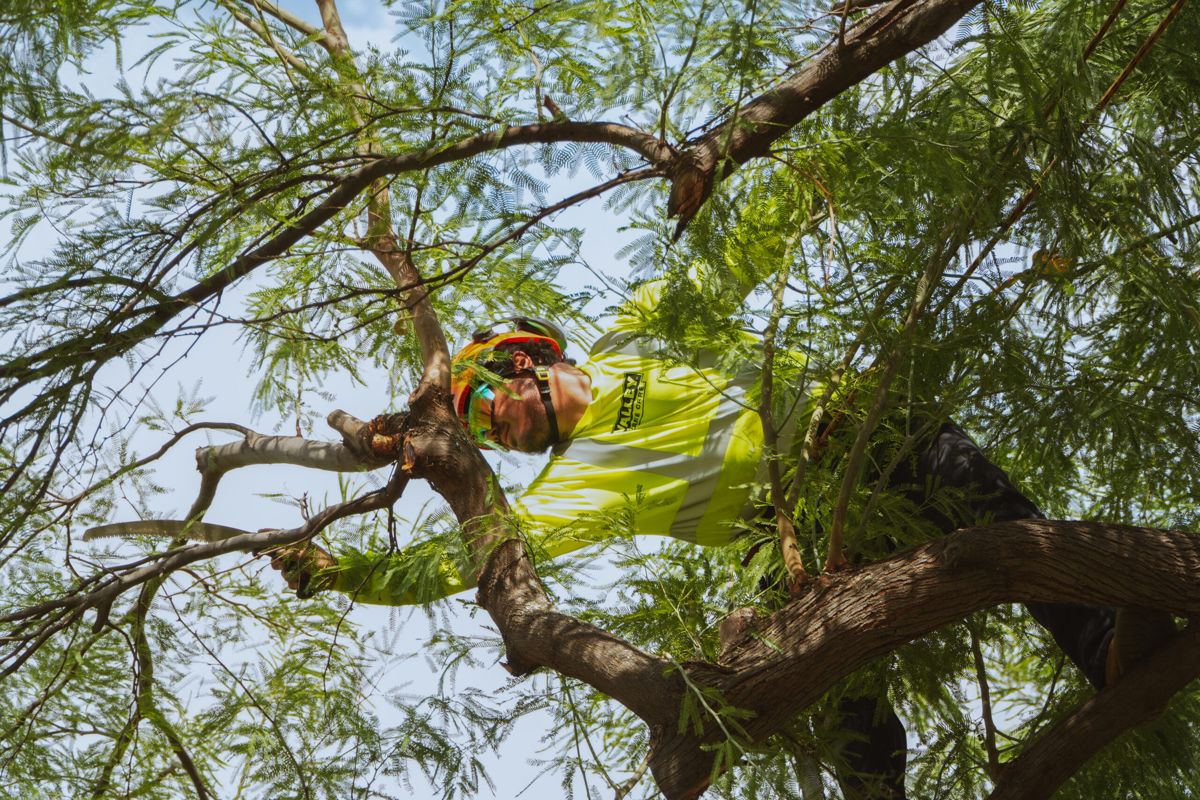
Palo Verde trees (Parkinsonia spp.) are iconic desert natives in Phoenix, AZ, prized for their vibrant green bark, airy canopy, and resilience in hot, arid climates. Whether it's the Blue Palo Verde, Foothill Palo Verde, or the hybrid Desert Museum variety, these trees bring shade, color, and character to any landscape.
1. Root Rot (Phytophthora) - Excess moisture or poor drainage can cause root rot, even in highly drought-tolerant trees. Early symptoms include thinning canopy, branch dieback, and rapid yellowing. In severe cases, the tree may lean or fail suddenly due to compromised roots.
2. Palo Verde Borer Beetles - This large beetle lays eggs in the base of stressed trees. The larvae tunnel deep into the trunk and root system, causing structural weakening. Visible exit holes and oozing sap at the base are common indicators.
Why is my Palo Verde tree turning yellow?
Yellowing is most often caused by nutrient deficiencies (especially iron or nitrogen), improper watering, or root stress. Desert soils in Phoenix commonly contribute to chlorosis.
How often should I water my Palo Verde tree in Phoenix?
Deep water every 7-28 days depending on season, soil type, and tree age. Overwatering is the most common cause of decline, so allow soil to fully dry between cycles. Refer to our Watering Guide for more information
What causes Palo Verde trees to lose branches?
Answer not shown: the source loads it collapsed.
How do I know if my Palo Verde has the borer beetle?
Answer not shown: the source loads it collapsed.
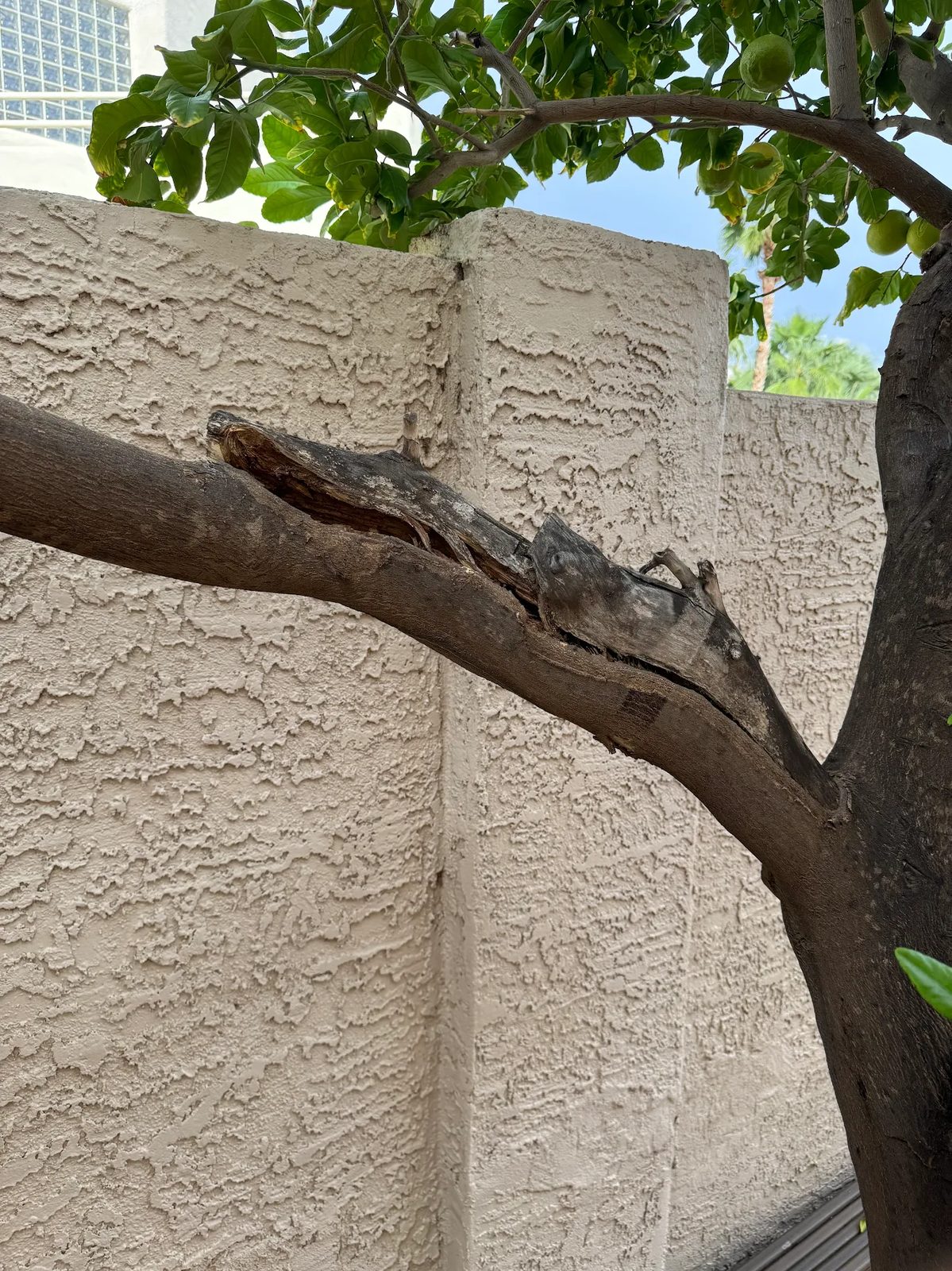
Why is my Desert Museum Palo Verde cracking or splitting?
Answer not shown: the source loads it collapsed.
📞 Schedule a FREE evaluation for your Palo Verde trees!
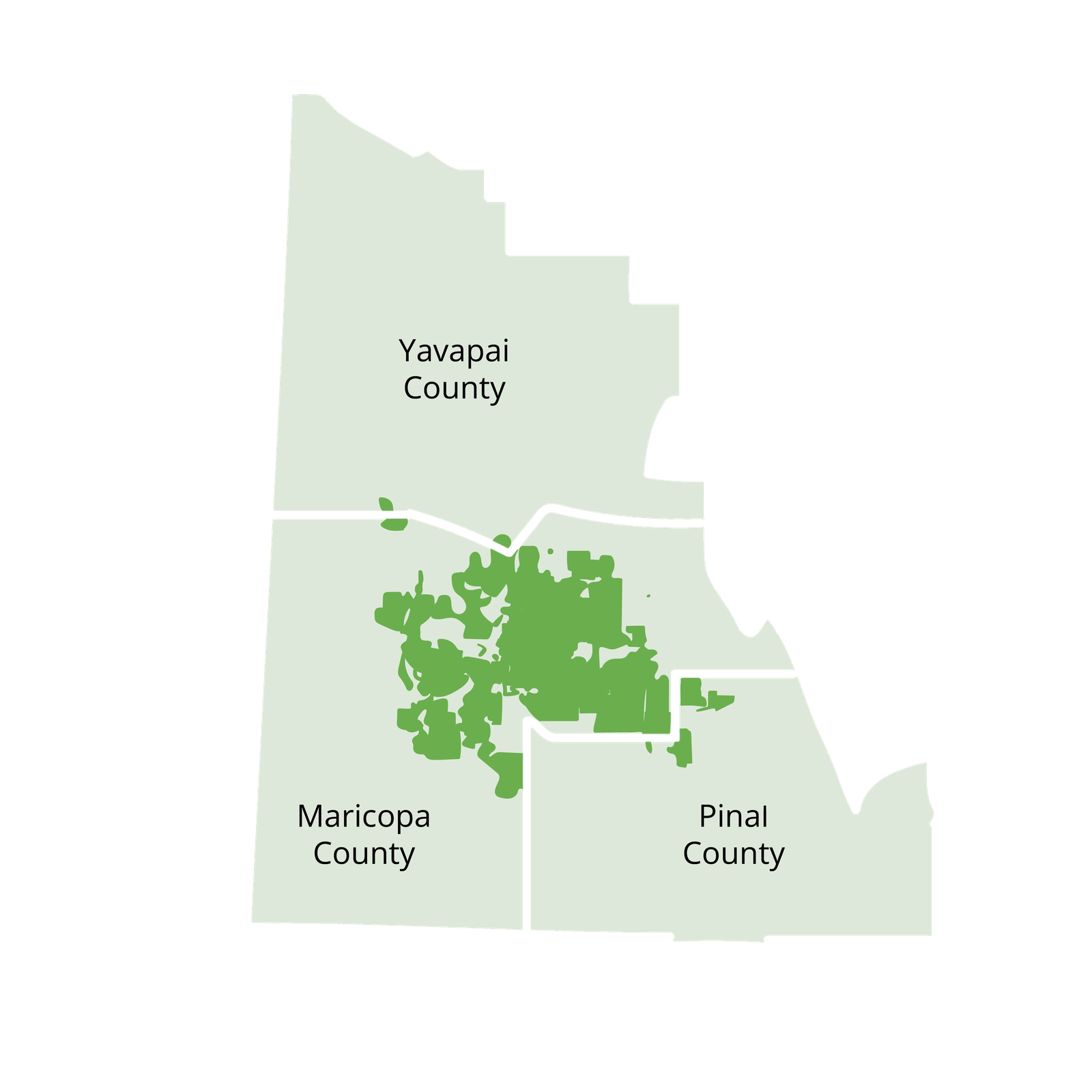
Palo Verdes may be desert-adapted, but hidden issues like root rot, borer damage, and structural weakness can develop quickly. Our Arborists perform evaluations across the Valley to diagnose these problems early and keep your Palo Verdes healthy, stable, and thriving.